IP & Reverse Engineering Protection and Code Encryption
Protect Your App from Reverse Engineering, IP Theft & Static Analysis
Safeguards the code and fortifies your apps by combining advanced encryption and seamless integration techniques with Bugsmirror Shield.
Bugsmirror Shield - Anti-Reverse Engineering Tool for Android & iOS Mobile Apps:
Encrypts sensitive app strings and decrypts them only when needed, making them harder to extract or misuse.
Encrypts and securely loads DEX files at runtime, protecting critical app logic from extraction and modification.
Encrypts native .so libraries and securely loads them at runtime to make reverse engineering and code tampering harder.
Protect your app from IP theft, static analysis and reverse engineering.
Advanced code hardening, encryption and invisible code .

Securing Globally Trusted Brands
Bugsmirror MASST is trusted by teams across the industry to ship secure, reliable mobile applications.



















What is Reverse Engineering?
Reverse engineering is a technique of decompiling or dismantling binaries of an app to study its logic, internal mechanisms, and secrets. Attackers target applications by reverse engineering to understand how the app can be repackaged, spoofed and modified.
How do attackers reverse-engineer mobile apps?
Hackers reverse-engineer mobile apps by obtaining app binaries from the app market (App store, and Play store). They are using paid as well as freely available decompiler tools like APKTool, Jadx, and Frida to reassemble APK files.

Why are Anti-Reverse Engineering Tools Critical?
Extract hardcoded API keys, tokens, and encryption secrets.
Discover hidden or undocumented API endpoints.
Understand business logic to exploit workflow weaknesses.
Modify and repackage the app with malicious code.
Bypass root/jailbreak detection and other security checks.
Distribute malicious or repackage applications.
Secure your Mobile App with Best Anti-Reverse Engineering Tool
Protect your app logic with advanced anti-reverse engineering tool from static analysis when the app is not running. Unlike obfuscation that renames variables and methods, which can be analysed in the AI age. Bugsmirror Shield introduces advanced code hardening methods like deep transforming, encryption of sensitive components and decryption only by Bugsmirror Defender during runtime.
The protected code makes it significantly harder for attackers to understand, extract, or manipulate your app’s internal logic. Shield integrates seamlessly with different build environments while adding anti-tampering protection to prevent unauthorized modifications. Sensitive information such as keys, endpoints, and secrets is protected from cleartext exposure through encryption.
How Bugsmirror Shield Solves Mobile App Security Challenges?
Comprehensive Protection
Advanced Encryption
Beyond Basic Obfuscation
Easy to Embed
Turn Your App Binary Into a Dead End for Attackers
Bugsmirror Shield applies advanced protection techniques directly to your mobile app binary, ensuring that even if attackers gain access, they cannot understand or modify your application.
Step 1: App Hardening & Protection Layering
Shield applies multiple layers of protection including:
- String encryption
- DEX encryption & loading
- .So file & native code encryption
This makes reverse engineering nearly impossible in applications.
Step 2: Anti-Tampering Mechanisms
The code only decrypts during runtime in memory for short duration, while Bugsmirror Defender continuously checks the integrity of your application:
- Detects code modification
- Identifies repackaged apps
- Prevents unauthorized distribution
- Detection of debugging and hooking attempts.
- Protection against dynamic analysis tools.
Step 3: Low Overhead Security
Provides strong runtime security with minimal impact on app performance and user experience.
Step 4: Multi-Platform support
Language agnostic, compatible with Android, iOS and native application environments, seamlessly, integrating into existing development workflows.
See Bugsmirror Shield in action
Slide the handle left or right to compare the difference and see how our protection works in real-time.
 After
After Before
Built for Modern Business Mobile Applications
Protect fintech and banking apps from fraud and cloning.
Prevent reverse engineering, repackaging, static analysis, and intellectual property leaks.
Secure healthcare apps handling sensitive data of patients and health records.
Protect mobile applications APK/IPA files directly without requiring source code.
Prevent piracy and unauthorized distribution.
Safeguard enterprise applications and proprietary logic.
Why Choose Bugsmirror Shield?
Bugsmirror Shield goes beyond traditional methods and ensures end-to-end protection
It protects proprietary information that differentiates your brand in the market
It secures native, hybrid, and cross-platform apps, providing protection regardless of technology stack
Bugsmirror Shield’s techniques are optimized to ensure enhanced security with minimal performance impact
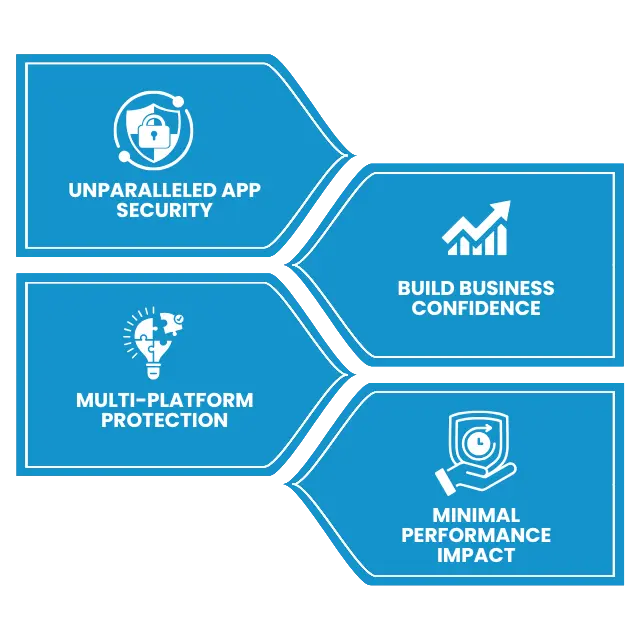
Bugsmirror Shield vs Code Obfuscation
Basic code obfuscation makes application code harder to read by renaming variables, methods, and classes. Bugsmirror Shield goes beyond basic obfuscation with code hardening, encryption, runtime protection, anti-tampering, and protection for sensitive application components.
| Security Capability | Bugsmirror Shield | Code Obfuscation |
|---|---|---|
| Code Hardening | Limited | |
| Sensitive String Encryption | ||
| DEX File Encryption | ||
| Secure DEX Loading at Runtime | ||
| Native Code Encryption | ||
| Anti-Reverse Engineering | Limited | |
| Static Analysis Protection | Limited | |
| Protection Across Multiple Build Environments | ||
| Multi-Platform Support | Limited |
Stop reverse engineering and Intellectual Property theft - secure your mobile applications with Bugsmirror Shield today
Frequently Asked Questions

Learn More From Our Security Blog
Dive deeper into bugsmirror shield and how it protects your codebase.
.webp)
How to Prevent Reverse Engineering in Android and iOS Mobile Apps
App repackaging and reverse engineering allow attackers to modify apps, steal data, and clone features. This blog explains how code encryption and app shielding protect mobile applications from tampering and IP theft.
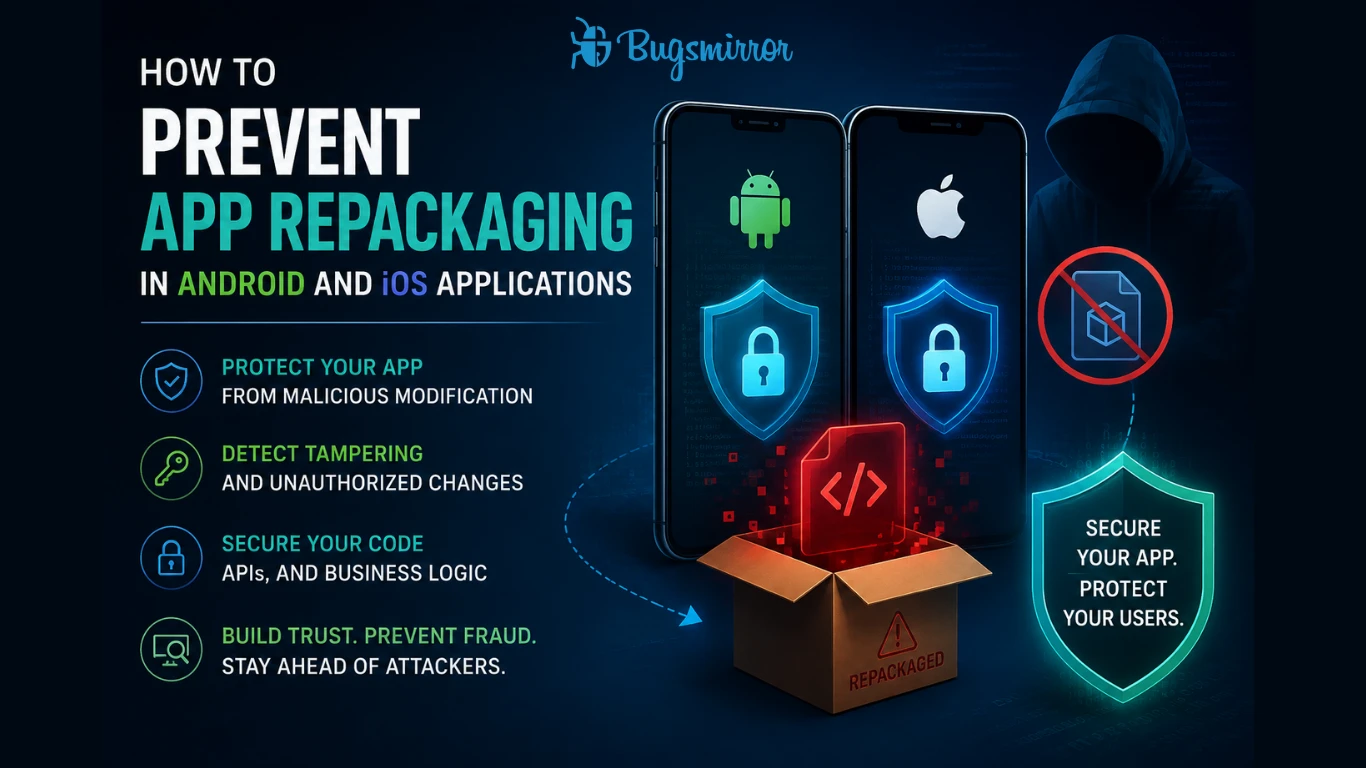
How to Prevent App Repackaging in Android and iOS Applications
App repackaging is a critical mobile app security threat where attackers modify and redistribute legitimate apps to inject malicious code. This can lead to fraud, data theft, and brand damage, making runtime protection and tamper detection essential for Android and iOS applications.